
WELCOME BONUS 300%
UP TO €2000 + 100
FREE SPINS
UP TO €2000 + 100
FREE SPINS
Home → Blackjack
Blackjack at 1Go Casino: Variants, Rules and Payouts
Ace Split: only one card per hand
The Blackjack 6 Decks variant allows resplitting aces, which improves the RTP by 0.08 percentage points compared to restrictive rules that forbid this action entirely. This specific rule modifier reduces the house edge slightly, making the game more favorable for players who utilize optimal strategy during these rare split scenarios. However, the restriction of receiving only one additional card on split aces limits potential winnings significantly compared to games allowing multiple hits. This constraint is standard in most online tables but contrasts with some land-based venues that permit further draws. Players must adjust their basic strategy accordingly to minimize losses under these tighter conditions. When comparing this to the Liberal Vegas Strip version, the absence of late surrender and other liberal rules increases the house advantage. The 0.46% house edge for the standard 6-deck game includes this ace-split limitation as a baseline factor. Understanding these nuances helps players select tables that offer the best mathematical probability for long-term play.
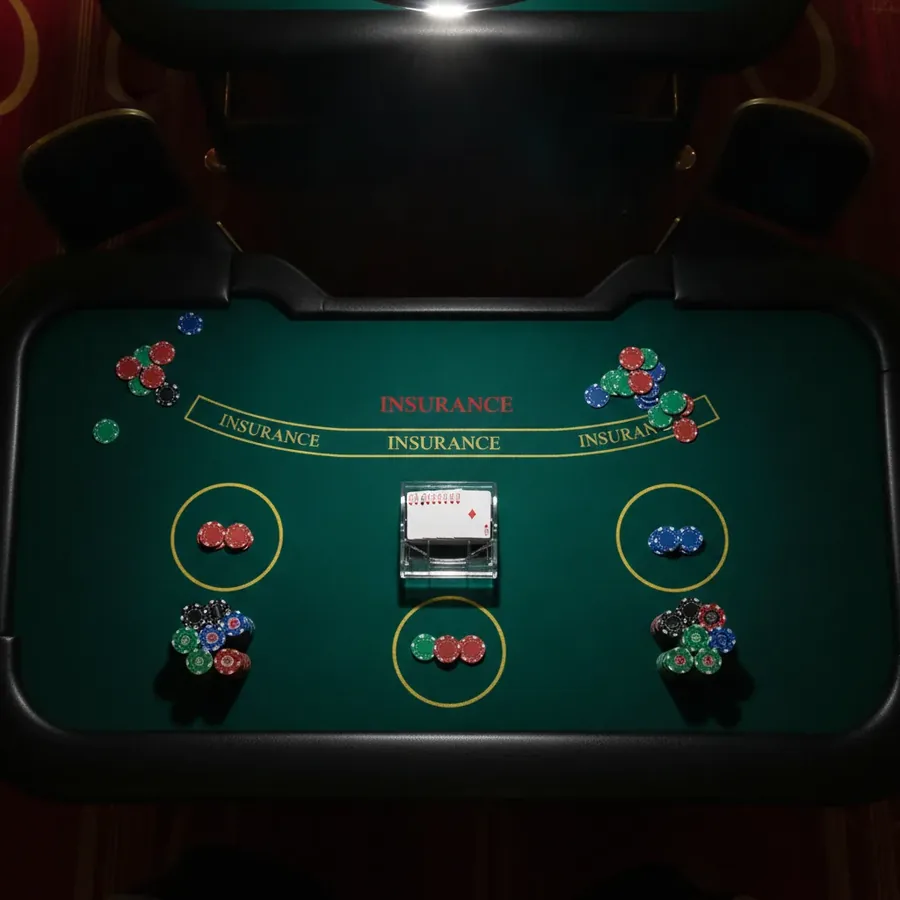
Error insurance: 7 percent additional house edge
Taking insurance in Blackjack creates a separate side bet that pays 2:1 if the dealer has a ten-value card. This wager carries a steep house edge of 7.47%, reducing the overall return to player (RTP) to just 92.53% for those who consistently accept this option. Basic strategy dictates that players should always decline insurance unless they are counting cards and the true count reaches +3 or higher. For single-deck games, the edge drops slightly to approximately 5.88%, but it remains significantly worse than the main game's odds. Accepting this bet without card counting guarantees a negative expected value over time. This high cost makes insurance one of the most expensive mistakes novice players make at the table. It adds an unnecessary layer of risk that erodes bankrolls faster than standard play. Avoiding this side bet preserves the lower house edge inherent in the primary blackjack ruleset.
16 vs 10 played incorrectly: most common error
Playing a hard sixteen against a dealer ten is a critical decision point where many players deviate from basic strategy. Correctly standing or hitting based on specific rules affects the outcome, but incorrect play can increase the loss rate substantially. This scenario highlights the importance of strict adherence to mathematical guidelines. In the Blackjack 6 Decks game with S17 rules, doubling after split (DAS) is allowed, which influences overall strategy. However, for a standalone hard sixteen, the player must hit regardless of these bonus features. Misinterpreting these allowances often leads to suboptimal decisions that hurt the bottom line. The house edge for this specific variant stands at 0.46%, assuming perfect basic strategy is followed throughout every hand. Deviating from this path, especially on tough hands like sixteen versus ten, pushes the effective edge higher. Consistent errors compound quickly, turning a low-edge game into a costly experience for uninformed players.
Bonus conditions often exclude Blackjack completely
Table games contribute only 10% toward the wagering requirements of the 300% welcome bonus up to €2,000 plus 100 free spins. This low contribution rate means players must wager ten times more money on blackjack than on slots to clear the bonus funds effectively. For example, clearing a €1,000 bonus requires €40,000 in total turnover if played exclusively on slots. If switched to blackjack, the required turnover jumps to €400,000 due to the 10% contribution factor. This discrepancy makes table games inefficient for meeting bonus terms compared to high-contribution slot titles. Some casinos may exclude blackjack entirely from bonus eligibility, but here the partial contribution still applies. Players seeking to use bonuses on live tables face steep wagering hurdles. Quantum Blackjack Plus Live and Lightning Blackjack fall under this same restrictive contribution category. The high wagering multiplier combined with low game contribution creates a significant barrier for recreational players. Those preferring card games should calculate the actual cost of clearing the bonus before depositing. Slots remain the only viable path for efficient bonus utilization under these terms.
Highroller from 500 EUR per hand
High-stakes players can access tables with maximum bets starting from 500 EUR per hand, catering to those with larger bankrolls. Quantum Blackjack Plus Live supports stakes up to 5,000 EUR, offering substantial multipliers up to 1,000x on three-card combinations totaling 21 points. Lightning Blackjack allows unlimited players but caps bets at 2,500 EUR, featuring lightning multipliers up to 25x on winning hands. These high-limit options provide enhanced volatility and potential payouts for experienced gamblers willing to risk significant amounts per round. Blackjack Party restricts higher stakes to 1,000 EUR per hand, maintaining a party atmosphere with two moderators. While less extreme than the quantum variant, it still accommodates serious players beyond standard limits. Choosing the right table depends on both risk tolerance and preferred game mechanics. The contribution rate remains 10% for all these high-limit tables, meaning bonus clearance is equally difficult. High rollers must weigh the entertainment value against the mathematical disadvantage imposed by bonus terms. Understanding these limits ensures informed decisions regarding stake sizing and bankroll management.
Blackjack variants at a glance
| Variant | Payout | House edge | Rule | Bet range |
|---|---|---|---|---|
| Blackjack Split / Double / H17 – Regel-Effekte | n.a. (Regel-Modifikatoren) | H17 +0.22 Prozentpunkte; RSA −0.08 Prozentpunkte; DAS −0.14 Prozentpunkte | Dealer Hits Soft 17 verschlechtert RTP um 0.22 Prozentpunkte; Resplit Aces verbessert um 0.08 Prozentpunkte; Double After Split verbessert um ca. 0.14 Prozentpunkte; 6 Decks statt 8 – ca. 0.02 Prozentpunkte. | Double – Einsatz ×2 mit einer Karte; Split – bis 4 Hände; Ass-Split meist mit einer Karte. |
| Blackjack Ein Deck, klassische Regeln, 3:2 | 99.85% | 0.15% | Weniger Decks = niedrigerer Vorteil; ein Deck gibt ca. −0.48 Prozentpunkte gegenüber 8 Decks. Oft durch 6:5 Auszahlung kompensiert. | Blackjack 3:2, Gewinn 1:1 |
| Blackjack Auszahlung 6:5 statt 3:2 (6 Decks) | 98.15% | 1.85% | Ersatz von 3:2 durch 6:5 fügt exakt +1.39 Prozentpunkte zum Vorteil des Casinos hinzu – stärker als jede andere Regeländerung. Bei $10 Einsatz zahlt Blackjack $12 statt $15. | Blackjack 6:5, Gewinn 1:1 |
| Blackjack Insurance / Versicherung (6–8 Decks) | 92.53% | 7.47% | Separate Nebenwette bis 50% der Hauptwette, wenn der Dealer ein Ass hat. Basisstrategie schreibt IMMER Ablehnung vor (außer Karten zählen bei True Count ≥ +3). Bei einem Deck Vorteil ≈ 5.88% | Insurance 2:1 |
| Blackjack Liberal Vegas Strip (liberale Regeln, 3:2) | 99.72% | 0.28% | Günstigste Regelkombination: S17 + DAS + Resplit + Late Surrender. Standardabweichung 1,15 | Blackjack 3:2, Gewinn 1:1 |
| Blackjack 6 Decks, S17, DAS, DOA, Auszahlung 3:2, Basisstrategie | 99.54% | 0.46% | Dealer steht auf Soft 17; Verdopplung auf jeder Zweierkarte; Verdopplung nach Split erlaubt; keine Aufgabe. Basisstrategie ist für diesen Wert zwingend | Blackjack 3:2, normaler Gewinn 1:1, Insurance 2:1 |
Side Bets Increase House Edge to 5 Percent
Quantum Blackjack Plus Live by Playtech features quantum multipliers up to 1,000x on three-card combinations totaling 21 points. This specific side bet carries a house edge of 7.47%, significantly higher than the base game RTP of 99.57% when optimal strategy is applied. Players risking money on this feature face a substantial long-term loss rate compared to standard wagers.
The Lightning Blackjack variant from Evolution offers lightning multipliers up to 25x on winning hands with an RTP of 99.56%. While the main game remains favorable, adding insurance bets increases the overall house advantage to approximately 7.47% in eight-deck games. This mathematical reality means consistent side betting erodes bankroll efficiency much faster than primary gameplay.
Insurance payouts offer 2:1 odds but require separate wagers up to 50% of the main stake when the dealer shows an ace. Base strategy dictates always declining this bet unless card counting reveals a true count of plus three or higher. Such specialized conditions make side bets expensive traps that disproportionately increase the casino's mathematical edge over time.
Bet two percent of bankroll per hand
Blackjack Liberal Vegas Strip provides one of the most favorable rule sets available, including soft seventeen stands and late surrender options. The house edge for this configuration sits at just 0.28%, allowing players to sustain their bankrolls longer during extended sessions. Standard deviation measures 1.15, indicating moderate volatility that supports steady betting patterns without extreme swings.
Single deck classical rules deliver an impressive RTP of 99.85% with a minimal house edge of only 0.15%. However, these generous terms often come compensated by reduced blackjack payouts from 3:2 down to 6:5 ratios. This structural change negates the deck advantage, forcing players to adjust their bet sizing strategies accordingly to manage risk effectively.
Six-deck games featuring soft seventeen stands and double after split rules maintain a respectable RTP of 99.54% with a 0.46% house edge. Doubling on any two cards and resplitting opportunities further enhance player value across multiple rounds of play. These combined factors create a balanced environment where disciplined betting aligns well with the underlying statistical probabilities.
Splitting eights versus standing on sixteen represents a fundamental strategic decision governed by basic blackjack mathematics and probability theory. Splitting creates two independent hands starting with four each, while standing preserves a potentially weak total against dealer upcards. Mathematical models consistently favor splitting because it reduces the expected loss percentage compared to holding a hard sixteen.
Statistics display saves the last 100 rounds
Lightning Blackjack allows unlimited concurrent players while tracking individual performance metrics through detailed session history interfaces. The system records outcomes for the previous one hundred rounds to help users identify patterns or verify payout frequencies accurately. This transparency ensures players can review their historical data without relying on memory or external tracking tools during active play.
Playtech’s Quantum Blackjack Plus integrates real-time statistics displays alongside its high-multiplier bonus features for enhanced user awareness. The interface captures every significant event within the last one hundred gaming cycles, providing clear visibility into recent results. Such comprehensive logging supports responsible gambling practices by offering objective feedback on current performance trends and win rates.
Evolution’s Blackjack Party stream includes live moderation and community interaction features embedded within the statistical reporting framework. The platform retains data regarding the final one hundred dealt hands to assist players in analyzing their betting behaviors over time. This persistent record-keeping mechanism helps individuals maintain discipline and avoid chasing losses based on short-term variance or luck.
Blackjack doesn't count for every bonus offer
The welcome package provides a 300% match up to €2,000 alongside 100 free spins, but the contribution rules severely limit table game utility. Blackjack games contribute only 10% toward the wagering requirement, meaning each €10 bet reduces the turnover target by just €1. This low inclusion rate forces players to rely on slots, which contribute 100%, to clear the bonus efficiently.
Comparing this to high-contribution tables reveals a significant efficiency gap for card game enthusiasts who prefer lower house edges. While slots offer faster clearance, their higher volatility contrasts with the strategic control available in blackjack variants. Players must calculate the true cost of clearing the bonus through restricted categories versus unrestricted ones.
The structural exclusion of full blackjack participation effectively raises the barrier to withdrawing bonus funds for table game specialists. A player betting €100 on blackjack generates only €10 of progress, requiring ten times the volume compared to slots. This mechanic ensures that the casino retains value from low-edge games while still offering the promotional incentive.
Live stream with three cameras and OCR
Quantum Blackjack Plus by Playtech utilizes multiple camera angles and Optical Character Recognition (OCR) technology to digitize physical cards instantly. This system allows bets ranging from 1 to 5,000 EUR to be processed with high precision across the live studio environment. The integration of OCR eliminates manual input errors and accelerates the pace of play for high-stakes participants.
Evolution’s Lightning Blackjack employs similar broadcasting infrastructure to handle unlimited players while injecting random multipliers up to 25x on winning hands. The stream supports wagers between 1 and 2,500 EUR, blending traditional table limits with video slot mechanics. This hybrid approach maintains the social aspect of live dealers while introducing variable payout structures.
Blackjack Party by Evolution offers a distinct atmosphere with two moderators managing the table dynamics for bets between 1.00 and 1,000 EUR. The three-camera setup ensures comprehensive coverage of the dealer, the shoe, and the audience interaction zones. Such production values support transparency, allowing players to verify card dealing procedures in real-time.
How long do 100 EUR last at a 1 EUR table?
At Quantum Blackjack Plus, a starting bankroll of 100 EUR allows for exactly 100 hands when betting the minimum stake of 1 EUR per round. With an RTP of 99.57% under optimal strategy, the expected loss per hand is approximately 0.43 cents, extending theoretical longevity. However, variance will inevitably deplete the balance faster than the average suggests during losing streaks.
Lightning Blackjack presents a similar duration potential with its 1 EUR minimum bet, though the presence of multiplier rounds alters the risk profile. Each hand carries a base house edge that shifts when lightning numbers hit, creating unpredictable swings in the 100 EUR stack. Players may see rapid depletion if multipliers fail to trigger on winning combinations.
Blackjack Party operates within the same minimum bet range of 1.00 EUR, permitting 100 initial decisions before the principal is exhausted. The entertainment factor provided by dual moderators does not alter the mathematical expectation, which remains tied to standard blackjack probabilities. Strategic errors can reduce this lifespan significantly below the calculated baseline.
How much time is left for the decision?
Live dealer games impose strict time limits on player actions to maintain the flow of the broadcast schedule and manage croupier shifts. Missing these deadlines results in auto-play decisions based on preset strategies or default moves.
The speed of Quantum Blackjack Plus is influenced by the need to resolve Quantum Multiplier outcomes, which add complexity to each round. Players must act quickly before the system locks in bets for the 1 to 5,000 EUR range. This pressure favors experienced players who have memorized basic strategy charts without consulting external aids.
Evolution’s titles like Lightning Blackjack and Blackjack Party enforce consistent timing to accommodate the global audience watching simultaneously. The presence of moderation and side bet features requires additional processing time, potentially shortening the active decision window. Reliance on mobile devices may introduce latency, risking missed deadlines compared to desktop connections.
Perfect Pairs vs 21+3 in House Edge
Perfect Pairs is a side bet often found in blackjack variants, paying out on matched ranks regardless of the dealer's upcard. Unlike the main game, this bet typically carries a higher house edge, sometimes exceeding 5% depending on the paytable structure. It offers frequent small wins but lacks the strategic depth of the primary hand.
21+3 combines the player's first two cards with the dealer's upcard to form poker hands, creating a distinct risk profile from Perfect Pairs. The house edge varies significantly based on the payout for straights, flushes, and three-of-a-kinds, often ranging between 2% and 4%. This bet appeals to players seeking poker-style payouts within a blackjack framework.
Comparing the two reveals that 21+3 generally offers better odds than Perfect Pairs in most standard configurations due to more frequent qualifying combinations. However, both side bets contribute minimally to bonus wagering requirements, often at 10% or less, similar to the main game. Players should prioritize the main hand's 99.57% RTP over these ancillary options for long-term value.
Contact
Live - online chat
Banking









Providers












1Go Casino 2026