
WELCOME BONUS 300%
UP TO €2000 + 100
FREE SPINS
UP TO €2000 + 100
FREE SPINS
Home → Roulette
Roulette at 1Go Casino
Small Budget: Why Straight 35:1 Empties Quickly
The straight bet pays 35 to 1 on the French Roulette table, but the house edge remains at 2.70% because La Partage does not apply to inner wagers. This structural disadvantage means a small bankroll depletes faster than on even-money bets where the edge drops to 1.35%. A player starting with 50 EUR faces a higher risk of ruin compared to those utilizing columns or dozens.
In contrast, the American Roulette variant carries a significantly steeper 5.26% house edge across all sectors due to the double zero. The five-number bet (0, 00, 1, 2, 3) is particularly dangerous for small budgets, offering only 6 to 1 payouts against a 7.89% house advantage. This specific wager has no equivalent on the European wheel and accelerates bankroll loss.
Tischspiele contribute only 10% toward the bonus turnover requirement, forcing players to wager much larger volumes to clear the funds. Consequently, the high variance of straight bets combined with this low contribution rate makes it difficult to retain value. Players must place significantly more total bets to unlock any potential withdrawals from the bonus.
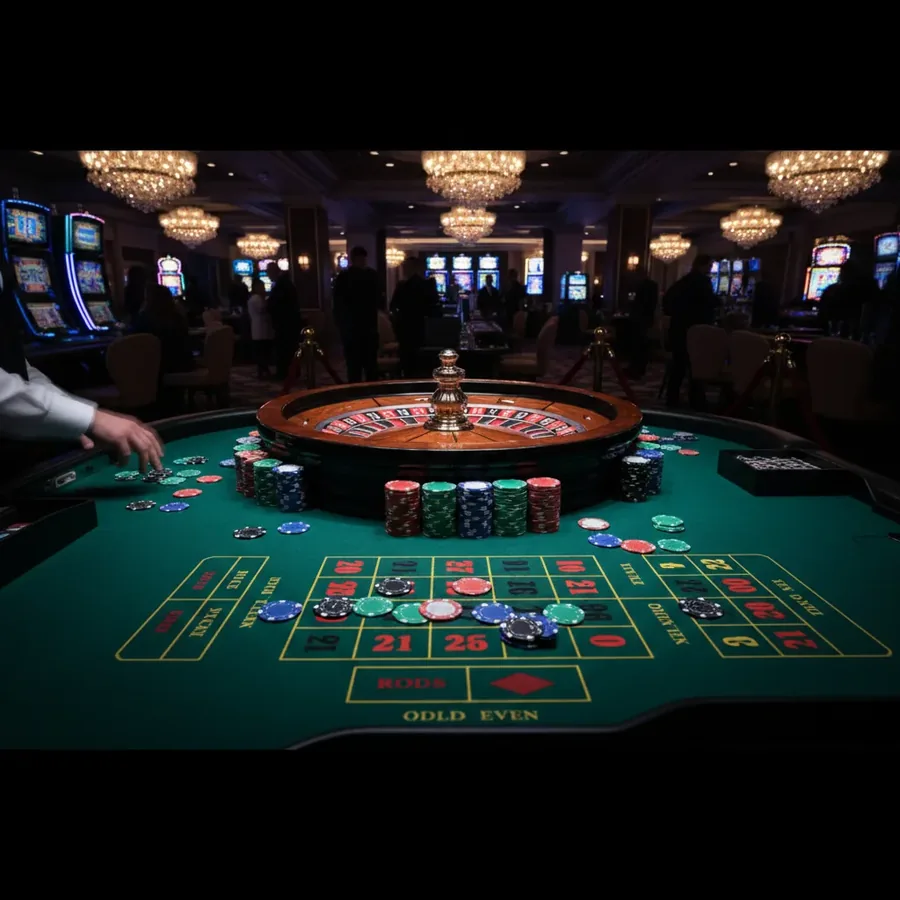
Quantum Roulette: Which Numbers Get Multipliers
Playtech’s Quantum Roulette Live applies random multipliers up to 500x directly onto individual numbers rather than outside bets. These multipliers target one to five specific numbers per round, potentially boosting the standard 35 to 1 payout for a straight bet. The base RTP remains 97.30%, but the volatility increases sharply during multiplier rounds.
Other live providers like Ezugi offer Ultimate Roulette, which features multipliers ranging from 50x to 1,000x on up to five numbers. These can be doubled further to reach 2,000x, creating massive payout opportunities that exceed the standard 35 to 1 limit. Authentic Gaming’s Auto Roulette Classic lacks these features, sticking strictly to the mechanical 35 to 1 payout.
The betting limits for these quantum tables range from 0.10 EUR to 5,000 EUR, allowing high-stakes exposure to the multiplier mechanics. Since La Partage is excluded from inner bets in standard French rules, the quantum feature offers the only way to significantly alter the expected return on single numbers. This mechanic separates high-volatility seekers from standard table players.
Mobile Tables: Which Betting Fields Become Smaller
Mobile interfaces for Quantum Roulette Live restrict the visible betting area, often shrinking the layout for inner numbers compared to desktop versions. The minimum bet of 0.10 EUR allows testing these cramped fields without significant financial commitment. However, the reduced screen space makes tracking multiple straight bets more difficult for users.
Auto Roulette Classic by Authentic Gaming maintains a simpler interface with a maximum payout of 35 to 1, mirroring the standard European wheel. The betting limits span from 0.10 EUR to 2,000 EUR, providing a moderate range for mobile wagering. Unlike the quantum variants, this table does not complicate the mobile experience with dynamic multiplier zones.
Ultimate Roulette by Ezugi supports bets up to 5,000 EUR, requiring a stable connection to manage the larger potential stakes on mobile devices. The visual presentation of multipliers up to 2,000x can obscure other betting options on smaller screens. Players must navigate carefully to ensure their intended straight or split bets are registered correctly before the spin begins.
Too High a Bet for a 50 EUR Bankroll
A 50 EUR bankroll is insufficient for the maximum limits seen in Quantum Roulette Live, which allow wagers up to 5,000 EUR per round. Even a modest 10 EUR bet on a straight number represents 20% of the total funds, exposing the player to rapid depletion. The 35 to 1 payout offers little recovery margin after a single loss.
The bonus terms require substantial turnover, and with table games contributing only 10%, a 50 EUR stake yields minimal progress toward clearing the 2,000 EUR bonus cap. A player would need to wager 4,000 EUR in turnover to meet standard requirements, which is unrealistic with such a small initial balance. This mismatch forces players to either deposit more or abandon the bonus.
Comparatively, the French Roulette with La Partage offers a lower house edge of 1.35% on even-money bets, preserving the 50 EUR bankroll longer. However, this favorable rule applies only to red/black or odd/even wagers, not the straight bets that yield higher immediate payouts. Small bankrolls are better suited to low-variance strategies on this specific variant.
House Edge 2.70 Percent in One Number
The French Roulette variant imposes a 2.70% house edge on straight bets, identical to the standard European wheel despite the French theme. This edge persists because the La Partage rule is explicitly excluded for inner wagers, leaving them vulnerable to the single zero. Players seeking the 1.35% edge must stick to outside bets.
In contrast, the American Roulette wheel doubles the house edge to 5.26% due to the presence of the double zero sector. This mathematical disadvantage applies uniformly to all bet types, including straights that pay 35 to 1. The additional zero sector effectively halves the probability of winning for every wager placed on the table.
The Five Number Bet on the American wheel exacerbates this issue with a 7.89% house edge, making it the worst option for players. This unique wager covers five sectors but returns only 6 to 1, creating a significant mathematical trap absent in European formats. Avoiding this bet is essential for maintaining any theoretical chance of profit over time.
Roulette bet types at a glance
| Bet | Payout | Win Chance | Numbers Covered | House Edge |
|---|---|---|---|---|
| Roulette Amerikanisch – Five Number Bet (0, 00, 1, 2, 3) | Five Number 6:1 (deckt 5 von 38 Sektoren) | 92.11% | Einzige Wette am amerikanischen Rad mit Edge über 5,26% – „Fallenwette“. Kein Äquivalent am europäischen Rad | 7.89% |
| Roulette Europäisch (einfache Null, 37 Sektoren) | Straight 35:1, Split 17:1, Street 11:1, Corner 8:1, Six Line 5:1, Dozen 2:1, Column 2:1, Rot/Schwarz 1:1, Odd/Even 1:1, 1-18/19-36 1:1 | 97.30% | 37 Sektoren (1–36 + 0); Auszahlungen wie für 36 Sektoren – daher konstanter Edge auf ALLE Wetten | 2.70% |
| Roulette Französisch, innere Einsätze (La Partage gilt nicht) | Straight 35:1, Split 17:1, Street 11:1, Corner 8:1, Six Line 5:1, Dozen 2:1, Column 2:1 | 97.30% | Rad gleich (37 Sektoren), aber La Partage/En Prison gilt nicht für innere Einsätze – Edge bleibt europäisch | 2.70% |
| Roulette Französisch mit La Partage (gerade Chancen) | Rot/Schwarz 1:1 (bei 0 Rückerstattung 50%), Odd/Even 1:1, Low/High 1:1; Innere Einsätze ohne La Partage: Straight 35:1, Split 17:1, Street 11:1, Corner 8:1 | 98.65% | Bei 0 wird die Hälfte des Einsatzes auf gerade Chancen zurückerstattet (Rot/Schwarz, Pair/Impair, Manque/Passe). En Prison gibt denselben 1,35%. Regel gilt NUR für gleiche Einsätze | 1.35% |
| Roulette Amerikanisch (doppelte Null, 38 Sektoren) | Straight 35:1, Split 17:1, Street 11:1, Corner 8:1, Six Line 5:1, Dozen 2:1, Column 2:1, Rot/Schwarz 1:1 | 94.74% | 38 Sektoren (1–36 + 0 + 00); Auszahlungen wie beim europäischen Rad, aber der zusätzliche Sektor verdoppelt den Hausvorteil | 5.26% |
RTP vs. House Edge: Same Number Differently
The American Roulette variant features a double zero layout with 38 sectors, resulting in a lower Return to Player of 94.74% compared to the European single-zero wheel's 97.30%. This structural difference increases the house edge from 2.70% on the European table to 5.26% on the American version, fundamentally altering long-term expected returns for players. Consequently, bettors face a significantly higher statistical disadvantage when choosing the American format over its European counterpart.
Quantum Roulette Live by Playtech offers a standard RTP of 97.30%, yet introduces Quantum Multipliers that can boost payouts up to 500x on selected numbers. This live dealer game maintains the 37-sector European wheel structure while adding volatility through random multiplier applications that exceed standard straight-up bets. The combination of stable base RTP and high-variance multipliers creates a unique risk profile distinct from traditional table games.
Ultimate Roulette by Ezugi provides another live option with a 97.30% RTP, featuring multipliers up to 1,000x that can double to 2,000x under specific conditions. While the base return matches Quantum Roulette, the potential for massive payouts on five-number combinations offers a different excitement curve than standard betting strategies. Players should note that these high-multiplier events occur randomly, making consistent income prediction impossible despite the favorable theoretical return percentage.
Max Bet Per Number vs. Max Bet Per Round
Auto Roulette Classic 1 Live by Authentic Gaming restricts wagers between 0.10 EUR and 2,000 EUR per round, limiting exposure on each spin. This maximum limit applies to the total stake placed across all bets within a single game round rather than per individual number selection. Such caps protect players from excessive losses during rapid-fire automated sessions while ensuring the casino manages its liability effectively.
Quantum Roulette Live allows stakes ranging from 0.10 EUR to 5,000 EUR per round, offering double the maximum wagering capacity of the Auto Roulette variant. This higher ceiling accommodates high-roller strategies but requires careful bankroll management due to the potential impact of Quantum Multipliers on large bets. The wider betting range reflects the game's design for players seeking higher volatility and larger potential payout scenarios.
Ultimate Roulette by Ezugi also permits bets up to 5,000 EUR per round, matching the upper limits of Quantum Roulette Live. However, the presence of multipliers affecting up to five numbers simultaneously means that effective exposure can vary significantly depending on bet distribution. Understanding these round-based limits is crucial for managing session budgets, as the total potential loss remains capped regardless of individual number selections.
La Partage Applies Only to Even Chances
French Roulette with La Partage refunds half the stake on even-chance bets like Red/Black when the ball lands on zero, reducing the house edge to 1.35%. This rule strictly applies only to outside bets such as Odd/Even or Low/High, leaving inner bets like Straights without any special protection. The mechanism effectively halves the penalty for zero outcomes on simple wagers, providing better value than standard European rules.
In contrast, French Roulette without La Partage maintains a 2.70% house edge on all bets, including even chances, because the refund mechanism is absent. Inner bets remain unaffected by any special rules, paying standard odds like 35:1 for Straight bets regardless of the zero outcome. Players relying on even-chance strategies lose the safety net provided by La Partage, increasing their long-term cost of play significantly.
The distinction between these two French variants highlights the importance of checking specific table rules before playing, as the 1.35% versus 2.70% edge represents a substantial difference in expected loss. A player betting 100 EUR on Red would lose only 1.35 EUR on average with La Partage, compared to 2.70 EUR without it. This mathematical advantage makes the La Partage variant superior for conservative betting approaches focused on longevity.
What Straight, Split, and Street Practically Mean
A Straight bet covers a single number and pays 35:1, requiring the ball to land precisely on the chosen spot to win. This high-risk wager offers the highest payout ratio among standard roulette bets but has the lowest probability of success at 1 in 37 on European wheels. Players using this strategy must accept frequent losses in exchange for the occasional large return that balances the negative expectation over time.
A Split bet covers two adjacent numbers and pays 17:1, doubling the coverage area while halving the payout compared to a Straight wager. This middle-ground option reduces variance slightly by increasing hit frequency, though the house edge remains constant at 2.70% for European roulette. Strategists often use Spits to balance risk and reward, covering more ground than singles without sacrificing too much potential profit per win.
A Street bet spans three consecutive numbers in a row and pays 11:1, offering broader coverage than either Straight or Split options. This bet type increases the probability of winning to approximately 8.1% on a European wheel while maintaining the same fundamental house advantage. The reduced payout reflects the increased likelihood of success, making Streets a popular choice for players seeking steady, moderate returns over high-variance gambling.
Error: Expecting La Partage at the Wrong Table
American Roulette lacks any La Partage or En Prison rules, meaning zero outcomes result in the full loss of even-chance bets without partial refunds. The presence of the double zero further exacerbates this disadvantage by increasing the house edge to 5.26%, nearly double that of European tables. Players expecting European protections will face significantly higher costs on American wheels, making them unsuitable for strategies reliant on zero-protection mechanisms.
The Five Number Bet on American Roulette, covering 0, 00, 1, 2, and 3, carries a steep 7.89% house edge, the worst on the table. This specific wager pays 6:1 but statistically guarantees a higher long-term loss rate than any other bet available in the game. Avoiding this trap is essential for minimizing losses, as no amount of strategic betting can overcome such a severe mathematical disadvantage inherent to the bet structure.
Tischspiele contribute only 10% toward bonus wagering requirements, meaning roulette bets progress bonus clearance very slowly compared to slot games. This restriction amplifies the impact of house edges, as players must wager ten times more volume to unlock bonus funds. Combining low contribution rates with high-edge games like American Roulette creates an inefficient path for clearing bonuses, requiring careful game selection to optimize value.
D'Alembert and Fibonacci Against the Same Table Limit
The 10% contribution rate for table games creates a steep barrier for progression systems under the 40x wagering requirement attached to the 300% welcome bonus up to €2,000. A player betting €1 per spin on European Roulette requires 20 spins to generate €1 in turnover, meaning the full €2,000 bonus demands 80,000 eligible spins. This volume exposes the player to the standard 2.70% house edge inherent in the game's 37 sectors. The cumulative mathematical expectation over such a high volume inevitably erodes the bonus balance before the terms are cleared.
How the Random Generator Maps 37 Pockets
European Roulette operates on a wheel with exactly 37 sectors, comprising numbers one through thirty-six plus a single zero. This configuration establishes a fixed house edge of 2.70%, which corresponds to an RTP of 97.30% across all bet types. In contrast, American Roulette utilizes 38 sectors including a double zero, pushing the house edge up to 5.26%. The additional pocket in the American variant effectively doubles the casino's statistical advantage compared to the single-zero layout.
La Partage Halves Loss on Zero
French Roulette featuring La Partage returns fifty percent of even-money wagers when the ball lands on zero. This rule reduces the house edge on red/black or odd/even bets from 2.70% down to 1.35%, raising the RTP to 98.65%. Standard European Roulette lacks this protection, retaining the higher 2.70% edge on identical outside bets. Consequently, players using French variants preserve their bankroll more effectively during losing streaks involving the zero sector.
Contact
Live - online chat
Banking









Providers












1Go Casino 2026